


Frosty Drew Field Studies
"Hands On, Minds On" is our philosophy, and students participating in a Frosty Drew field study program find it an unforgettable experience. To offer the best field study experiences, Frosty Drew is partnering with Salt Ponds Coalition. We invite you to experience a field study that approach scientific concepts in life and earth science in a fun way. Students can expect many hands-on, minds-on opportunities as they inquire, observe, assess, learn, and better understand the interactions of the living environment. For questions and reservations, please contact Salt Ponds Coalition at saltpondscoalition@gmail.com or by phone at (401) 322-3068.
Field Studies Programs
- Salt Pond Safaris (formerly Estuary Adventures)
-
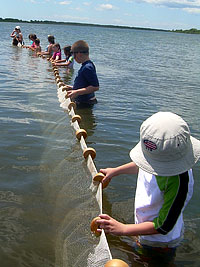
Our "outdoor classroom" is the Ninigret National Wildlife Refuge, Charlestown, RI. Salt Pond Safaris introduce dozens of kids to the wonders of the salt ponds. Using a 30' seine net, we will do our best to catch a variety of aquatic creatures to introduce to the children. The kids get hands-on experience with salt pond ecology--plan on them getting wet!
Salt Pond Safaris meet at the Fish and Wildlife Service parking area at the end of the access road in Ninigret Wildlife Refuge, Charlestown, RI. Take the Ninigret Park exit off of Rt. 1 North, then enter Ninigret Park on the right about 1/4 mile later. Follow the access road all the way to the end. There are toilet facilities at the parking area. We will have a short walk on a flat trail to the pond (Grassy Point), out of sight of the parking lot, and will leave the parking lot at 10 AM. Please be there at least 10 minutes early to check in, we don't want to miss you!
- Registration and Availability of Salt Ponds Safaris
-
- Field trips are available from June thru August, last about 1.5 hours in length, and can accommodate a maximum of 15 children per field study. Pre- registration is required!
- To register, please contact saltpondscoalition@gmail.com or by phone at (401) 322-3068. For additional information, please visit the Salt Ponds Coalition.
We look forward to working with your group!